

What Is the Don’t Pass Bet in Craps?
The Don’t Pass bet is the mathematical mirror of the Pass Line — and the slightly smarter wager. With a house edge of 1.36% compared to the Pass Line’s 1.41%, it offers the lowest base house edge of any standard bet on the craps table. Yet most players avoid it, and understanding why reveals something fundamental about the psychology of craps.
When you place a Don’t Pass bet, you are betting against the shooter. In craps culture, this is called “playing the dark side” or being a “wrong bettor.” The table cheers when the shooter makes the point, and you lose. The table groans on a seven-out, and you collect. This social dynamic keeps most players on the Pass Line, even though the Don’t Pass is mathematically superior.
At online craps tables, however, the social pressure vanishes entirely. There are no other players watching, no groans to endure, and no judgement to face. This makes online craps the ideal environment for Don’t Pass strategy.
How the Don’t Pass Bet Works
Phase 1: The Come Out Roll
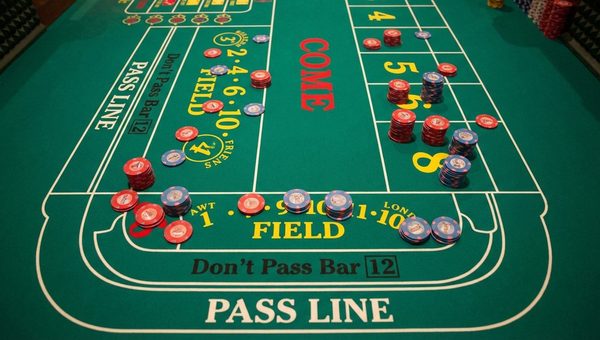
Place your chips on the Don’t Pass Bar before the come out roll. Here is what happens:
| Roll | Result | What Happens |
|---|---|---|
| 2 or 3 | WIN | You win even money immediately |
| 12 | PUSH (Bar) | Your bet is returned — no win, no loss |
| 7 or 11 | LOSE | You lose your bet immediately |
| 4, 5, 6, 8, 9, or 10 | Point Established | Puck moves to the number. Play enters Phase 2. |
The 12 being barred (pushed) is what gives the casino its edge. Without the bar, the Don’t Pass would have a player advantage. With it, the house holds a slim 1.36% edge — still the best base bet in craps.
Phase 2: The Point Phase
Once a point is established, the Don’t Pass bettor is in a favourable position. You need a 7 to appear before the point number — and since 7 is the most frequently rolled number, the odds are in your favour.
| Point Number | Your Win Probability | Your Advantage |
|---|---|---|
| 4 or 10 | 66.67% | Strong favourite |
| 5 or 9 | 60.00% | Clear favourite |
| 6 or 8 | 54.55% | Slight favourite |
This is the key insight: after a point is set, the Don’t Pass bettor has a mathematical advantage on every roll. The casino allowed this because it already collected its edge during the come out roll (where 7 and 11 are more likely than 2 and 3, hurting Don’t Pass bettors).
Why You Should Never Remove a Don’t Pass Bet
Unlike the Pass Line (which is a contract bet), the Don’t Pass bet can be removed at any time during the point phase. However, doing so is one of the worst strategic mistakes in craps.
Consider: once a point is established, you are the favourite to win. Removing your bet at this stage is like folding a winning poker hand. The casino made the Don’t Pass removable precisely because removing it benefits the house. Do not fall for this trap.
Laying Odds on Don’t Pass
Just like Pass Line bettors can take Odds, Don’t Pass bettors can Lay Odds. The mechanics are slightly different because you are now the favourite.
How Laying Odds Works
When you Lay Odds, you bet more to win less (because the 7 is more likely than the point). The casino pays at true odds — 0% house edge on the Odds portion.
| Point | Lay Odds Payout | Example: Lay £30 |
|---|---|---|
| 4 or 10 | 1:2 | Win £15 |
| 5 or 9 | 2:3 | Win £20 |
| 6 or 8 | 5:6 | Win £25 |
Maximum Lay Odds
Lay Odds limits are usually calculated based on the maximum win amount rather than the bet amount. At a table offering 3x-4x-5x odds with a £10 Don’t Pass bet, you would win a maximum of £60 from your Odds bet — so your Lay amount is calculated backwards from there.
Combined House Edge with Laying Odds
| Odds Multiple | Combined Edge (Don’t Pass + Lay) |
|---|---|
| No Odds | 1.36% |
| 1x Lay | 0.68% |
| 2x Lay | 0.45% |
| 3x-4x-5x Lay | 0.27% |
| 10x Lay | 0.12% |
At 3x-4x-5x lay odds, your combined house edge drops to 0.27% — even lower than the Pass Line with odds (0.37%). This makes Don’t Pass with Laying Odds the absolute best standard bet combination available in craps.
Don’t Pass vs Pass Line: A Detailed Comparison
| Factor | Pass Line | Don’t Pass |
|---|---|---|
| House Edge | 1.41% | 1.36% |
| Come Out Win % | 22.22% | 8.33% |
| Come Out Loss % | 11.11% | 22.22% |
| Point Phase Favourite? | No — underdog | Yes — favourite |
| Contract Bet? | Yes — cannot remove | No — can remove (but should not) |
| Odds Bet Type | Take Odds (win more) | Lay Odds (risk more to win less) |
| Social Acceptance | Universally welcomed | Often frowned upon at live tables |
| Combined Edge (3x-4x-5x) | 0.37% | 0.27% |
The mathematical case for Don’t Pass is clear: it offers a lower house edge at every level of Odds. The only drawback is social. If you play at a live casino, be prepared for the occasional side-eye from fellow players. At online craps tables, this is entirely irrelevant.
Don’t Pass Strategy: Optimal Play
Step-by-Step Optimal Don’t Pass Play
- Place minimum Don’t Pass bet before the come out roll.
- Survive the come out: Accept that 7 and 11 (8 out of 36 rolls) will beat you. The come out is the vulnerable phase.
- Point established: Immediately Lay maximum Odds behind your Don’t Pass bet.
- Wait: The 7 is now your friend. There are 6 ways to roll it, more than any individual point number.
- Never remove your bet: Once you survive the come out, you are the favourite. Stay in.
Adding Don’t Come Bets
For more action, add Don’t Come bets after the point is established. Each Don’t Come bet works identically to the Don’t Pass — it has its own come out roll, then moves to a point where you Lay Odds. Having 2-3 Don’t numbers working with Odds gives you multiple ways to win on a 7.
The downside: if a 7 does appear, you win all your Don’t bets simultaneously — but you also lose your Don’t Come bets during their come out phase if they have not yet moved to a point. Managing multiple Don’t bets requires careful attention to timing.
The Psychology of Don’t Pass Betting
Playing the dark side requires mental fortitude. Here is what to expect:
- Come out frustration: You will lose on 7 and 11 — the most common come out results. Watching natural after natural eat into your bankroll tests your patience.
- Social isolation: At live tables, you may find yourself celebrating alone while the table mourns. Some players take it personally. Wear headphones if it bothers you.
- Emotional swings: Don’t Pass tends to produce longer losing streaks (during come out phases) punctuated by steady wins during point phases. The variance pattern feels different from Pass Line play.
For tips on navigating table dynamics as a wrong bettor, see our craps etiquette guide.
When to Choose Don’t Pass Over Pass Line
- Online craps: No social pressure — always default to Don’t Pass for the lower edge
- Mathematically focused play: If minimising the house edge is your priority, Don’t Pass wins
- Cold tables: Whilst dice outcomes are random, if you prefer betting with the 7 rather than against it, Don’t Pass aligns with the most probable outcome
- Solo play at live casinos: If you are the only player at the table, there is no social dynamic to consider
Frequently Asked Questions
Why is 12 barred on the Don’t Pass?
If 12 were a winning number for Don’t Pass on the come out roll, the bet would have a player advantage (the house edge would be negative). By barring 12 — making it a push instead of a win — the casino ensures it retains a small 1.36% edge. Some casinos bar 2 instead of 12, but the mathematical effect is identical.
Is Don’t Pass betting considered rude?
At live casinos, some players view Don’t Pass betting as antisocial because you profit from the table’s losses. However, it is a completely legitimate bet offered by the casino. Experienced players and casino staff have no issue with it. At online tables, there is zero social dynamic to worry about.
Can I switch between Pass and Don’t Pass?
Yes, you can alternate between Pass and Don’t Pass on each new come out roll. There is no rule requiring consistency. Some players switch based on intuition, though mathematically it makes no difference — each roll is independent. If you are purely optimising, stick with Don’t Pass consistently.
What is the difference between Don’t Pass and Don’t Come?
Don’t Pass is placed before the table’s come out roll. Don’t Come is placed after a point is established and acts as a personal Don’t Pass bet — the next roll is your come out. Both have a 1.36% house edge and both allow Laying Odds. The key difference is timing and the ability to have multiple Don’t Come bets working simultaneously.
How much bankroll do I need for Don’t Pass strategy?
The Don’t Pass bet has slightly lower variance than the Pass Line because you are the favourite during the point phase. A session bankroll of 40-50 times your minimum bet is generally sufficient. If you are Laying Odds as well, ensure you have enough to cover the larger Odds bets (since you risk more to win less when laying).
Is the Don’t Pass bet better for long sessions?
Yes. The lower house edge (1.36% vs 1.41%) means you lose less per hour on average. Over a 4-hour session with steady play, the difference amounts to approximately £1-2 at a £10 minimum table. Small, but it compounds over a lifetime of play. Combined with Laying Odds, the advantage becomes more meaningful.
What happens if the shooter makes their point when I have a Don’t Pass bet?
You lose your Don’t Pass bet and any Lay Odds behind it. The shooter keeps the dice, and a new come out roll begins. Place a new Don’t Pass bet for the next round.
Can I use the Martingale system with Don’t Pass?
The Martingale (doubling after losses) does not change the house edge and is not recommended for any craps bet. Table limits prevent unlimited doubling, and a streak of come out 7s and 11s can rapidly escalate your bets. Flat betting with maximum Lay Odds is a far superior approach. For more on why betting systems fail, see our craps strategy guide.