
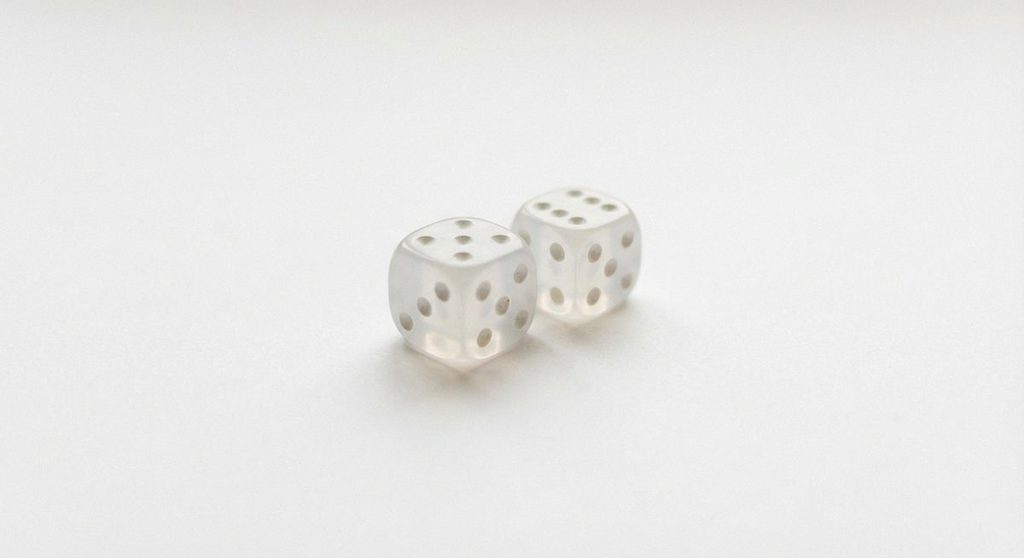

What Is Simplified Craps?
If you’ve ever watched a standard craps game and felt overwhelmed by the sheer number of bets, phases, and table markings, simplified craps might be exactly what you need. As the name suggests, this is a stripped-down version of the classic dice game that removes virtually all complexity — leaving you with a pure, one-roll gambling experience.
In simplified craps, there is no come-out roll followed by a point phase. There are no Pass Line bets, Don’t Pass bets, Come bets, or any of the dozens of proposition wagers that make standard craps both thrilling and intimidating. Instead, every single roll of the dice produces an immediate result: you either win or you lose. It really is that straightforward.
This variant was designed specifically for players who want the excitement of rolling dice without needing to memorise an entire rulebook first. Whether you’re completely new to dice games or simply fancy a faster pace, simplified craps delivers a clean, accessible experience that anyone can pick up in seconds.
How to Play Simplified Craps — Complete Rules
The rules of simplified craps can be explained in under a minute, which is precisely the point. Here’s how it works:
Step 1: Place your wager before the roll.
Step 2: Roll two standard six-sided dice.
Step 3: Check the total against these outcomes:
You WIN if the total is: 2, 3, 4, 10, 11, or 12
You LOSE if the total is: 5, 6, 7, 8, or 9
That’s the entire game. There is no second roll, no point number to remember, no additional decisions to make. The dice land, you check the total, and the round is over. If you’re coming from standard craps, you’ll notice this eliminates the entire point phase that typically extends rounds across multiple rolls.
The winning numbers in simplified craps are the extremes of the bell curve — the totals that sit at the outer edges of probability. The losing numbers occupy the fat middle of the distribution, which is precisely where the house derives its advantage.
Simplified Craps Odds and Probabilities
Understanding the mathematics behind simplified craps is genuinely simple, unlike the complex odds calculations in standard craps. With two six-sided dice, there are exactly 36 possible combinations. Let’s break down every outcome:
Winning Combinations (12 out of 36)
- Total of 2: 1 combination (1+1) — probability 2.78%
- Total of 3: 2 combinations (1+2, 2+1) — probability 5.56%
- Total of 4: 3 combinations (1+3, 2+2, 3+1) — probability 8.33%
- Total of 10: 3 combinations (4+6, 5+5, 6+4) — probability 8.33%
- Total of 11: 2 combinations (5+6, 6+5) — probability 5.56%
- Total of 12: 1 combination (6+6) — probability 2.78%
Total winning ways: 12 out of 36 = 33.33%
Losing Combinations (24 out of 36)
- Total of 5: 4 combinations — probability 11.11%
- Total of 6: 5 combinations — probability 13.89%
- Total of 7: 6 combinations — probability 16.67%
- Total of 8: 5 combinations — probability 13.89%
- Total of 9: 4 combinations — probability 11.11%
Total losing ways: 24 out of 36 = 66.67%
The House Edge
The house edge in simplified craps works out to approximately 2.78%. This means that for every £100 wagered over time, the casino expects to retain roughly £2.78. While this is higher than the 1.41% house edge on the Pass Line bet in standard craps, it’s still considerably better than many casino games such as American roulette (5.26%) or most slot machines.
The even-money payout structure (win £1 for every £1 wagered) combined with the 33.33% win probability creates this mathematical edge. In a perfectly fair game, you’d need to win 50% of the time to break even at even money — but with only a one-in-three chance of winning, the house maintains its consistent advantage.
Simplified Craps vs Standard Craps — Detailed Comparison
To properly understand where simplified craps fits in the gambling landscape, let’s compare it directly with the standard game:
| Feature | Simplified Craps | Standard Craps |
|---|---|---|
| Rolls per round | Exactly 1 | 1 to potentially dozens |
| House edge (main bet) | 2.78% | 1.41% (Pass Line) |
| Number of bet types | 1 | 40+ |
| Learning time | Under 1 minute | Several hours to days |
| Strategy involved | None (pure chance) | Moderate (bet selection) |
| Average round duration | Seconds | Minutes |
| Excitement level | Moderate | Very high |
| Social atmosphere | Minimal | Extremely social |
| Casino availability | Very rare | Widespread |
Advantages of Simplified Craps
- Instant comprehension: Anyone can understand the rules within seconds, making it perfect for absolute beginners
- Rapid gameplay: Each round takes mere seconds, ideal for players who dislike waiting
- No intimidation factor: Unlike a crowded craps table where experienced players might grow impatient with newcomers, simplified craps has zero learning curve
- Transparent odds: The mathematics are easy to verify yourself with basic arithmetic
Disadvantages of Simplified Craps
- Higher house edge: At 2.78%, you’re giving up nearly double the edge compared to a standard Pass Line bet
- Zero strategic depth: There are no decisions to make beyond bet sizing, which can become tedious quickly
- Limited excitement: The communal thrill of a hot shooter on a standard craps table simply doesn’t exist here
- Monotonous gameplay: Without variety in bet types or multi-roll sequences, sessions can feel repetitive
Simplified Craps Strategy — What You Can Control
Let’s be direct: there is no strategy that can overcome the house edge in simplified craps. Every roll is completely independent, the odds are fixed, and no betting pattern or system can change the fundamental 33.33% win probability. Anyone claiming otherwise is selling nonsense.
That said, there are sensible approaches to managing your bankroll and session:
Set a session bankroll: Decide before you start exactly how much you’re willing to lose. Given the rapid pace of simplified craps, money can move quickly in either direction. A bankroll of 30-50 units gives you a reasonable session length.
Use flat betting: Wager the same amount on every roll. Progressive systems like Martingale (doubling after losses) don’t change the house edge and can accelerate losses dramatically during bad streaks.
Define win and loss limits: If you double your starting bankroll, consider walking away. Similarly, if you hit your loss limit, stop. The speed of simplified craps makes discipline especially important.
Keep sessions short: The longer you play any negative-expectation game, the more likely the house edge will manifest in your results. Short sessions with clear limits are far more enjoyable than marathon grinding.
Where to Find Simplified Craps
Simplified craps is not a game you’ll commonly encounter in brick-and-mortar casinos. Most physical casinos offer only standard craps at their dice tables, as the full game generates far more revenue through its extensive betting menu and longer rounds that keep players engaged.
However, simplified craps does appear in several contexts. Some online casino platforms offer it as a novelty variant, typically alongside other simplified versions of classic table games. It occasionally surfaces in mobile gaming apps, often as a free-to-play introduction to dice gambling.
Perhaps its most valuable role is as a teaching tool. If you’re learning about probability and casino mathematics, simplified craps provides the clearest possible illustration of how a house edge works. The maths is transparent, the outcomes are binary, and there are no complicating variables.
For those interested in exploring dice games with more depth, consider looking at other variants such as crapless craps (which eliminates craps-out numbers) or street craps (the informal version played outside casinos).
Who Should Play Simplified Craps?
Simplified craps occupies a specific niche, and it’s worth being honest about who will actually enjoy it:
Absolute beginners: If you’ve never played any form of craps and want to understand the basic concept of dice probability before tackling the full game, simplified craps is an excellent starting point. It teaches you how dice combinations work without any additional complexity.
Players seeking fast action: If you enjoy quick-resolution bets similar to coin flips or roulette spins, simplified craps delivers that rapid feedback loop. Each roll is its own complete game.
Home game enthusiasts: For casual gatherings or parties, simplified craps works brilliantly as a party game. Everyone understands the rules immediately, you only need two dice, and rounds are lightning-fast.
Probability students: The clean mathematical structure makes simplified craps an ideal teaching example for anyone studying gambling mathematics, expected value, or basic probability theory.
Who should avoid it: Experienced craps players who enjoy the strategic depth and social energy of a standard craps table will likely find simplified craps far too basic. If you already know how to play standard craps, this variant won’t offer you anything new.
Frequently Asked Questions About Simplified Craps
What numbers win in simplified craps?
In simplified craps, you win when the dice total 2, 3, 4, 10, 11, or 12. These are the numbers at the extreme ends of the two-dice probability distribution, representing 12 out of 36 possible combinations.
What is the house edge in simplified craps?
The house edge in simplified craps is 2.78%. This is higher than the 1.41% house edge on the Pass Line in standard craps but lower than many other casino games including American roulette (5.26%) and most slot machines.
Is simplified craps better than regular craps?
It depends on your priorities. Simplified craps is easier to learn and faster to play, but standard craps offers a lower house edge on the Pass Line, far more strategic options, and a much more exciting social atmosphere. Most experienced players prefer the standard version.
Can you use a strategy to win at simplified craps?
No legitimate strategy can overcome the house edge in simplified craps. Since every roll is independent and outcomes are determined purely by chance, no betting system or pattern recognition will change your long-term expected return. Focus on bankroll management instead.
Why is 7 a losing number in simplified craps?
Seven is the most probable total when rolling two dice (6 out of 36 combinations, or 16.67%). By making the most common outcome a loss, the game ensures the house maintains its mathematical advantage. This is the primary mechanism that creates the house edge.
How many ways can you win in simplified craps?
There are exactly 12 ways to win out of 36 possible dice combinations, giving you a 33.33% chance of winning on any given roll. The remaining 24 combinations (66.67%) result in a loss.
Is simplified craps available at online casinos?
Simplified craps is quite rare at online casinos, though some platforms do offer it as a novelty variant. You’re far more likely to find standard craps, which is available at virtually every reputable online casino. Check our craps odds guide for more on what to expect.
What is the difference between simplified craps and crapless craps?
These are completely different variants. Simplified craps is a one-roll game with no point phase. Crapless craps retains the full multi-roll structure but eliminates the ability to lose on the come-out roll (no craps-out numbers), though with a significantly higher house edge of approximately 5.38%.
How fast is a round of simplified craps?
A round of simplified craps takes only seconds — literally the time needed to roll the dice and check the total. Compare this to standard craps where a single round can involve dozens of rolls if a point is established. This makes it one of the fastest casino games in existence.
Can you play simplified craps at home?
Absolutely. Simplified craps is one of the easiest casino games to replicate at home. All you need is two standard dice and something to wager with. The rules are simple enough that anyone can serve as the dealer, making it an excellent choice for casual game nights and gatherings.
What is the probability of rolling each number in simplified craps?
The probability varies by total: 2 and 12 each have a 2.78% chance (1 combination), 3 and 11 each have 5.56% (2 combinations), 4 and 10 each have 8.33% (3 combinations), 5 and 9 each have 11.11% (4 combinations), 6 and 8 each have 13.89% (5 combinations), and 7 has the highest probability at 16.67% (6 combinations).
Is simplified craps suitable for teaching children about probability?
Yes, simplified craps is an excellent educational tool for teaching basic probability concepts. The two-dice system creates a clear bell curve of outcomes, and the win/lose structure makes it easy to discuss expected value, probability distributions, and the mathematical basis of casino games — all without any real gambling involved.