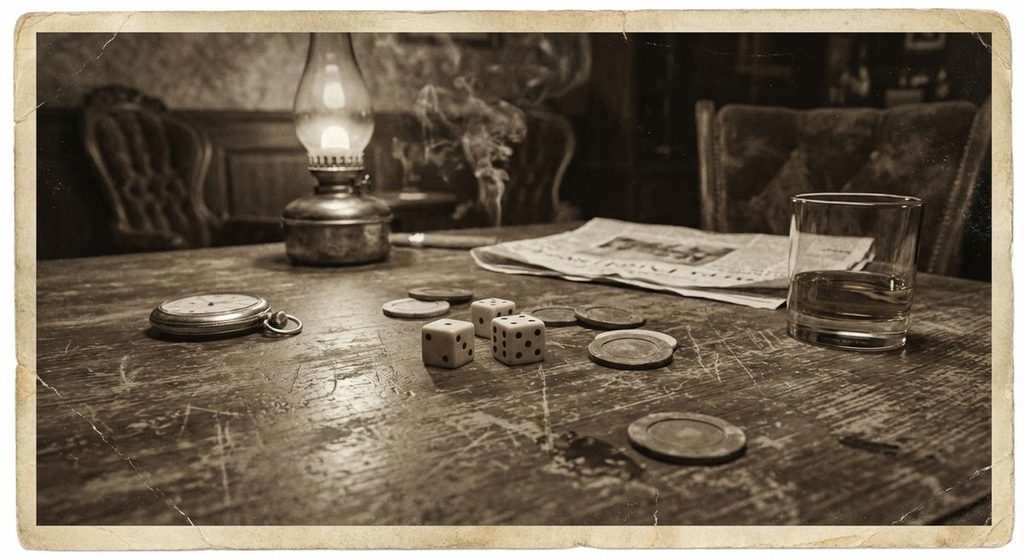

A Journey Through Millennia: How Craps Became the World’s Most Exciting Casino Game
The history of craps stretches back thousands of years, tracing a remarkable path from ancient bone-throwing rituals to the electrifying digital tables of modern online casinos. Few casino games can claim such a rich and colourful heritage. What began as a primitive form of divination in ancient civilisations evolved through medieval English taverns, the bustling streets of 19th-century New Orleans, and the glittering casino floors of Las Vegas — ultimately arriving on your screen as one of the most thrilling gambling experiences available today.
Understanding the rules of craps becomes far more rewarding when you appreciate the centuries of evolution behind every roll of the dice. This comprehensive guide explores the complete history of craps, from its earliest origins to its exciting digital future, revealing how each era shaped the game millions of players enjoy worldwide.
Ancient Origins of Dice Games: Where It All Began (3000 BC and Earlier)
Long before anyone uttered the word “craps,” ancient civilisations were already captivated by the unpredictable tumble of small objects. The earliest dice-like implements weren’t crafted from plastic or ivory — they were knucklebones, specifically the astragalus bones taken from the ankles of sheep and other hoofed animals. Archaeological evidence suggests these primitive dice were in use as far back as 3000 BC, and possibly even earlier.
Mesopotamian and Egyptian Dice
Excavations throughout the ancient Near East have uncovered dice made from bone, stone, and clay in Mesopotamian sites dating to approximately 3000 BC. The ancient Sumerians played a board game called the Royal Game of Ur, which incorporated dice-like randomisers. Meanwhile, in ancient Egypt, tomb paintings depict figures engaged in dice games, and actual dice have been recovered from burial sites along the Nile.
These early dice were far from the perfectly balanced cubes we know today. Many were fashioned from animal bones — the astragalus bone being particularly popular due to its four distinct flat sides. Each side would land with a different probability, lending an inherent bias to the game. Despite this imperfection, the fundamental concept remained the same: cast the bones and let fate decide.
Greek and Roman Dice Culture
The ancient Greeks enthusiastically adopted dice games, referring to them as astragaloi (knucklebones) and kuboi (cubical dice). Greek soldiers reportedly passed idle hours between battles casting lots, and references to dice games appear throughout classical literature, including Homer’s works.
The Romans, however, truly elevated dice gaming to a cultural phenomenon. Roman legionaries were famously passionate gamblers, carrying dice throughout their campaigns across Europe, North Africa, and the Middle East. The Latin phrase “alea iacta est” — “the die is cast” — attributed to Julius Caesar as he crossed the Rubicon in 49 BC, speaks to the profound cultural significance of dice in Roman society.
Roman dice games included Tali (played with four knucklebones) and Tesserae (played with three cubical dice). Wagers were commonplace, and despite periodic imperial bans on gambling, dice games flourished in taverns, bathhouses, and military camps throughout the Roman Empire. When Roman legions marched into Britain, they brought their dice — and their gambling habits — with them, planting seeds that would eventually blossom into the game of Hazard.
Dice in Ancient Asia
It is worth noting that dice games developed independently across Asia as well. Ancient Indian texts, including the Rigveda (composed around 1500-1200 BC), contain hymns about dice gambling. The Mahabharata, one of India’s great epics, features a pivotal dice game that drives much of the plot. Chinese archaeological sites have yielded dice dating back thousands of years, demonstrating that the human fascination with chance-based gaming was truly universal.
The Hazard Game: Medieval England’s Favourite Dice Obsession
The most direct ancestor of modern craps is the game of Hazard, a complex and addictive dice game that dominated English gambling culture for centuries. Hazard represents the crucial evolutionary link between ancient dice rituals and the craps tables we know today.
Origins of Hazard: The Crusader Legend
According to popular legend, Hazard was invented — or at least popularised — by English soldiers during the Crusades in the 12th century. One widely repeated account credits Sir William of Tyre with creating the game during the siege of a castle called Hazarth (or Asart) around 1125 AD, from which the game supposedly derived its name. However, many historians dispute this etymology, suggesting instead that the word comes from the Arabic al-zahr, meaning “the die.”
Regardless of its precise origin, Hazard was well established in England by the 14th century. Geoffrey Chaucer, writing in The Canterbury Tales around 1390, makes explicit reference to Hazard in “The Pardoner’s Tale,” where he describes riotous young gamblers: “Hasard is verray mooder of lesynges, And of deceite, and cursed forswerynges.” (Hazard is the very mother of lies, and of deceit, and cursed perjuries.) This literary mention confirms that Hazard was not merely known but culturally significant in late medieval England.
How Hazard Was Played
Hazard was considerably more complex than modern craps, which partly explains why craps eventually supplanted it. The game used two dice and involved the following key elements:
- The Caster — the player rolling the dice — would first select a “main” number between 5 and 9.
- The caster then threw the dice. If they rolled the main, they won outright (a “nick”).
- Rolling a 2 or 3 was always a loss (an “out”).
- Rolling an 11 or 12 could be a nick or an out depending on the chosen main.
- Any other number became the “chance” — the caster continued rolling until they hit the chance (winning) or the main (losing).
The variable rules depending on the chosen main made Hazard intellectually demanding and prone to confusion — qualities that would eventually drive players towards the simpler game of craps.
Hazard’s Golden Age: 17th and 18th Century England
Hazard reached the peak of its popularity during the 17th and 18th centuries. The game was played everywhere, from squalid alleyways to the most exclusive gentlemen’s clubs of London. Crockford’s, the legendary gambling club on St James’s Street founded by William Crockford in 1828, was renowned for its Hazard tables, where aristocrats wagered — and frequently lost — enormous fortunes.
The game’s popularity transcended social classes. Samuel Pepys, the famous diarist, recorded Hazard games in 17th-century London. By the 18th century, Hazard was so prevalent that moralists and pamphleteers regularly denounced it as a societal menace, a sure sign of its widespread appeal.
From Hazard to Craps: The French Connection and the Birth of a New Game
The transformation of Hazard into craps is a story that crosses the English Channel, traverses the Atlantic Ocean, and lands squarely in the vibrant melting pot of colonial New Orleans. It is a tale of linguistic evolution, cultural exchange, and one colourful Louisiana aristocrat.
The Etymology: “Crabs” Becomes “Craps”
In Hazard, rolling a two — the lowest possible throw — was known as “crabs.” This was the most unfortunate outcome for the caster, an instant loss regardless of the chosen main. When French gamblers adopted Hazard, they took this term with them, and through the natural evolution of language, “crabs” was gradually corrupted into “craps.”
An alternative theory suggests the French already had a word, crapaud (meaning “toad”), which described the crouching posture of street gamblers hunched over their dice on pavements and alleyways. Whether “craps” derives from “crabs” or “crapaud” — or some combination of both — remains a matter of scholarly debate. What is certain is that by the early 19th century, the game was being called “craps” in the French-speaking communities of Louisiana.
Bernard de Marigny and the Arrival of Craps in America
The individual most frequently credited with introducing craps to America is Bernard Xavier Philippe de Marigny de Mandeville (1785-1868), a wealthy Creole nobleman and gambler from one of Louisiana’s most prominent families. Having encountered the game during his travels in Europe — likely in England, where Hazard was still immensely popular — Marigny brought a simplified version back to New Orleans in the early 1800s.
Marigny was a flamboyant character: a prolific gambler, socialite, and political figure who eventually squandered much of his considerable fortune. He was so associated with the dice game that a street in the French Quarter of New Orleans — Rue de Craps (now Burgundy Street in the Marigny neighbourhood) — was reportedly named after his favourite pastime.
The game Marigny popularised was a streamlined version of Hazard, stripping away much of the complexity. The main was fixed at 7, eliminating the confusing variable rules of the original. This simplification was key to the game’s explosive growth — craps was faster, easier to learn, and more accessible to a broader audience.
Street Craps and the 19th-Century American Explosion
From the parlours of New Orleans’ elite, craps rapidly spread through the city’s diverse communities and beyond. The game proved especially popular among African American communities along the Mississippi River, who developed a further simplified version known as street craps (or “shooting dice”).
The Mississippi River and Riverboat Gambling
The mighty Mississippi served as a superhighway for the spread of craps throughout 19th-century America. Riverboat gamblers — a mixture of professional card sharps, hustlers, and enthusiastic amateurs — carried the game from New Orleans northward through Memphis, St. Louis, and beyond. Steamboat passengers, merchants, and travellers all encountered craps on these floating gambling dens, ensuring the game’s rapid dissemination across the American heartland.
By the mid-1800s, craps had established itself as one of America’s most popular gambling games. It was played in back alleys, behind factories, in military camps, and anywhere else that men gathered with a few coins and a pair of dice.
The Problem of Cheating
Early craps had a significant vulnerability: fixed (loaded) dice. Because the original version only allowed players to bet with the shooter (betting that the shooter would win), operators and hustlers could use weighted or shaved dice to guarantee specific outcomes. The player with the “right” dice held an insurmountable advantage, and the game earned a reputation for corruption.
This fundamental flaw in the game’s design would persist until the early 20th century, when a Philadelphia dice maker would revolutionise craps forever.
John H. Winn’s Revolution: The Father of Modern Craps (c. 1907-1910)
If Bernard de Marigny introduced craps to America, then John H. Winn made it the fair, balanced game we recognise today. Winn, a dice maker from Philadelphia, introduced a series of innovations around 1907-1910 that fundamentally transformed craps and set the stage for its casino dominance.
The “Don’t Pass” Line: A Game-Changing Innovation
Winn’s masterstroke was the introduction of the “Don’t Pass” betting area. For the first time, players could bet against the shooter — wagering that the dice would lose rather than win. This seemingly simple addition had profound consequences:
- It eliminated the loaded dice scam. If players could bet both for and against the shooter, fixed dice became pointless — whatever outcome the loaded dice produced, some bettors would win and others would lose. The operator could no longer guarantee a profit through rigged dice.
- It created a balanced game. With bets available on both sides of the outcome, the mathematics of craps became more symmetrical, creating fairer odds for all participants.
- It established the house edge. The Don’t Pass line allowed casinos to build in a small but consistent mathematical advantage, making craps commercially viable as a legitimate casino game.
The Modern Table Layout
Winn also redesigned the craps table layout, creating the basic template that persists to this day. His layout organised the various betting areas — Pass Line, Don’t Pass, Come, Don’t Come, Field, and proposition bets — into a logical, accessible format. Understanding craps terminology becomes much easier when you appreciate that the layout was specifically designed for clarity.
This redesigned layout made the game easier to manage for casino operators, easier to understand for new players, and far more resistant to cheating. Winn’s contributions cannot be overstated — he effectively invented casino craps as we know it, transforming a dodgy street hustle into a legitimate game of chance.
Casino Craps Takes Las Vegas by Storm (1930s Onwards)
The stage was set for craps to become the undisputed king of casino games. All it needed was a city willing to embrace gambling wholeheartedly — and in 1931, Nevada delivered.
Nevada Legalises Gambling: 1931
When Nevada legalised wide-open gambling on 19 March 1931, casino operators in Las Vegas and Reno immediately installed craps tables alongside their roulette wheels and card tables. The game’s fast pace, social atmosphere, and relatively fair odds made it an instant hit.
Early Las Vegas casinos like the Northern Club, El Rancho Vegas (opened 1941), and the Flamingo (opened 1946 under Bugsy Siegel’s direction) all featured prominent craps tables. The game’s cacophonous energy — the shouts, the cheers, the clatter of dice — became synonymous with the Las Vegas experience.
World War II: Craps Goes to War
The Second World War played an unexpectedly crucial role in popularising craps. American servicemen, stationed in barracks, camps, and bases around the world, turned to craps as their gambling game of choice. It required minimal equipment — just a pair of dice and a flat surface — making it perfect for military life.
Millions of young men learned how to play craps during their military service. When they returned home after the war, they brought their love of the game with them. The post-war economic boom, combined with this enormous new player base, created a golden age for craps that lasted from the late 1940s through the 1970s.
During this era, craps was arguably the most popular casino game in America, regularly generating more revenue than blackjack, roulette, or slot machines. The craps table was where the action was — where the biggest bets were made, the loudest celebrations erupted, and the most dramatic stories unfolded.
The Rat Pack Era and Craps Culture
The 1950s and 1960s cemented craps’ status as the glamour game of Las Vegas. Frank Sinatra, Dean Martin, Sammy Davis Jr., and the rest of the Rat Pack were famously enthusiastic craps players, and their association with the game added an irresistible aura of cool. Craps in popular culture owes much to this era, which saw the game become a symbol of sophisticated risk-taking and high-rolling excitement.
Some of the most famous craps moments in history occurred during this golden period, including legendary winning streaks that have passed into gambling folklore.
Craps in British Casinos: A Different Path
While craps was conquering American casino floors, its journey through the United Kingdom followed a markedly different trajectory — more restrained, more regulated, and ultimately less dominant than in the United States.
The Gambling Act 1960 and the Birth of British Casinos
Before 1960, casino gambling in Britain operated in a legal grey area. The Betting and Gaming Act 1960 was the first legislation to permit casino-style gambling, though it did so with considerable restrictions. The subsequent Gaming Act 1968 established a more comprehensive regulatory framework, creating the Gaming Board of Great Britain to oversee the industry.
British casinos were permitted to offer craps, but the game never achieved the same dominance as in American venues. Several factors contributed to this:
- Cultural differences: British gambling culture leaned more towards horse racing, football pools, and games like roulette and blackjack.
- Regulatory constraints: Strict UK gaming regulations limited advertising and promotional activities, making it harder to build excitement around craps.
- Table minimums: British casino craps often carried higher minimum bets, discouraging casual players.
- Noise levels: The boisterous atmosphere typical of American craps tables sat somewhat uncomfortably with the more reserved ambience of traditional British casinos.
The UK Casino Landscape Today
Today, craps tables can be found in major UK casinos, particularly in London establishments like Hippodrome Casino, The Ritz Club, and various Grosvenor Casinos locations. However, craps remains a niche game in British brick-and-mortar casinos, far less prevalent than roulette, blackjack, or slot machines.
The Gambling Act 2005, which modernised UK gambling regulation and established the UK Gambling Commission, created a more permissive environment for online gambling — and it is in the digital realm that craps has found its most enthusiastic British audience. Craps popularity trends show a marked increase in online play among UK gamblers in recent years.
The Digital Revolution: Online Craps Transforms the Game
The advent of the internet brought about the most significant transformation in the history of craps since John H. Winn redesigned the table layout. Online craps opened the game to millions of players who had never set foot in a casino, democratising access and introducing innovative new ways to play.
The First Online Casinos (Mid-1990s)
The first online casinos appeared in the mid-1990s, with InterCasino (launched in 1996) generally credited as one of the earliest legitimate operations. These pioneering platforms offered digital versions of classic casino games, including craps, powered by random number generators (RNGs) that replicated the mathematical probabilities of physical dice.
Early online craps was rudimentary by modern standards — basic graphics, limited betting options, and none of the social atmosphere that made the game so compelling in brick-and-mortar casinos. Nevertheless, the convenience of playing from home at any hour, combined with lower minimum bets than physical casinos, attracted a steadily growing player base.
Software Innovation and Enhanced Gameplay
As internet technology improved, so did online craps. Major software providers like Microgaming, Playtech, and NetEnt developed increasingly sophisticated craps simulations featuring:
- Realistic 3D graphics and physics-based dice animations
- Comprehensive betting interfaces covering all standard wagers
- Detailed statistics and betting history
- Adjustable game speed and auto-play options
- Tutorial modes for beginners learning craps strategy
Live Dealer Craps: The Best of Both Worlds
Perhaps the most significant innovation in online craps has been the introduction of live dealer games. Pioneered by Evolution Gaming (now Evolution), live dealer craps streams real-time video of an actual craps table, operated by a professional dealer, directly to players’ devices.
Evolution’s First Person Craps and live craps offerings combine the convenience of online play with the authentic atmosphere of a physical casino. Players can watch real dice being rolled, interact with dealers via chat, and experience the social energy that has always been central to the craps experience — all from the comfort of their own home.
Mobile Craps: The Game in Your Pocket
The smartphone revolution brought craps to an entirely new audience. Mobile-optimised craps games allow players to enjoy a quick session during a commute, a lunch break, or from the sofa. Touch-screen interfaces have made the game more intuitive than ever, with players able to place bets with a simple tap and swipe the screen to roll the dice.
The combination of mobile accessibility, live dealer technology, and increasingly sophisticated RNG games has made the 2020s arguably the most exciting era in craps history for players. The game has never been more accessible, more varied, or more convenient to play.
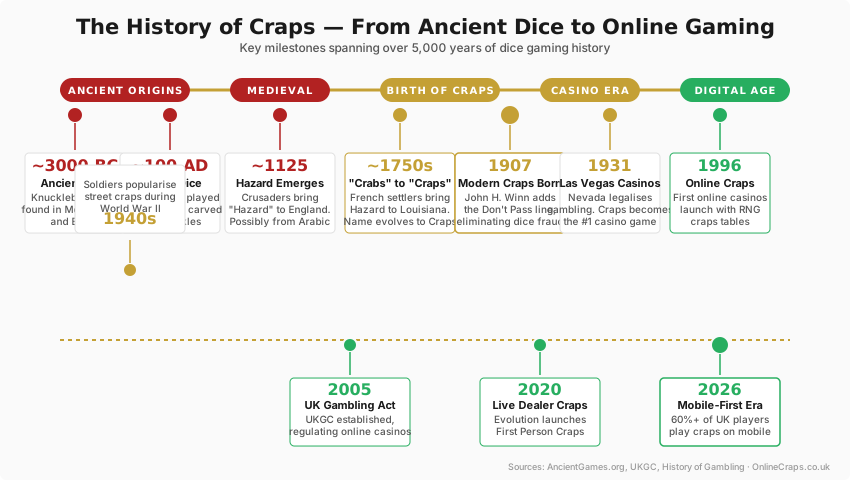
Complete Timeline: Key Dates in the History of Craps
| Date | Event | Significance |
|---|---|---|
| c. 3000 BC | Earliest known dice (Mesopotamia/Egypt) | Knucklebones and clay dice used in games of chance |
| c. 1500 BC | Dice references in Indian Rigveda | Demonstrates universal appeal of dice gaming |
| 49 BC | Caesar crosses the Rubicon — “alea iacta est” | Dice metaphor enters Western culture permanently |
| c. 1125 AD | Hazard reportedly created during Crusades | Direct ancestor of modern craps emerges |
| c. 1390 | Chaucer mentions Hazard in Canterbury Tales | First major literary reference to the game |
| 17th-18th C | Hazard dominates English gambling culture | Game reaches peak popularity in London clubs |
| c. 1805 | Bernard de Marigny brings craps to New Orleans | Simplified Hazard becomes “craps” in America |
| 1840s-1860s | Craps spreads via Mississippi riverboats | Game reaches American heartland |
| c. 1907-1910 | John H. Winn invents modern craps layout | Don’t Pass line eliminates fixed dice scam |
| 1931 | Nevada legalises gambling | Craps enters the legitimate casino era |
| 1941-1945 | WWII soldiers popularise craps | Millions learn the game in military service |
| 1950s-1960s | Golden age of Las Vegas craps | Rat Pack era cements craps as the glamour game |
| 1960 | UK Betting and Gaming Act | British casinos legally permitted to offer craps |
| 1996 | First online casinos launch | Digital craps becomes available worldwide |
| 2005 | UK Gambling Act modernises regulation | Online craps gains legitimacy in British market |
| 2010s | Live dealer craps launched by Evolution | Real-time streaming brings authentic experience online |
| 2020s | Mobile craps and VR experiments | Most accessible era in craps history |
The Future of Craps: What Lies Ahead for the World’s Oldest Dice Game
As craps enters its fifth millennium (counting from those ancient Mesopotamian knucklebones), the game shows no signs of fading. Several trends are shaping the future of craps:
Virtual Reality and Augmented Reality Craps
VR technology promises to deliver the full craps table experience — the roar of the crowd, the ritual of the dice throw, the camaraderie of fellow players — without leaving your living room. Several developers are already experimenting with VR casino environments, and craps, with its inherently social and physical nature, is ideally suited to this medium.
Cryptocurrency and Blockchain Gaming
Blockchain-based casinos are introducing provably fair craps games, where the randomness of each dice roll can be independently verified by players. This technology addresses the age-old concern about fairness that has followed dice games since the days of loaded knucklebones, bringing an unprecedented level of transparency to the game.
Skill-Based Variations
To appeal to younger demographics accustomed to video games, some developers are exploring craps variations that incorporate elements of skill alongside chance. These hybrid games retain the core dice-rolling mechanic whilst adding strategic layers that reward experience and decision-making.
Global Expansion
As gambling regulations evolve worldwide, craps is reaching new markets in Asia, Latin America, and Africa. The game’s simple premise — roll the dice and win — transcends cultural barriers, suggesting significant growth potential in emerging gambling markets.
Frequently Asked Questions About the History of Craps
How old is the game of craps?
The game of craps in its current form dates to approximately 1907-1910, when John H. Winn created the modern table layout. However, its direct ancestor, the game of Hazard, dates back to at least the 12th century, and dice games in general have been played for over 5,000 years, with the earliest known dice discovered in Mesopotamian archaeological sites dating to around 3000 BC.
Who invented craps?
No single person invented craps. The game evolved over centuries from the English game of Hazard. Bernard Xavier Philippe de Marigny de Mandeville is credited with bringing a simplified version to New Orleans in the early 1800s. John H. Winn later revolutionised the game around 1907-1910 by introducing the Don’t Pass line and designing the modern table layout, earning him the title “Father of Modern Craps.”
Why is the game called “craps”?
The most widely accepted explanation is that “craps” derives from “crabs,” a Hazard term for rolling a two (the lowest possible throw and an automatic loss). When French speakers in Louisiana adopted the game, “crabs” was gradually corrupted to “craps.” An alternative theory suggests it comes from the French word crapaud (toad), describing the crouching posture of street dice players.
What was the game of Hazard and how did it relate to craps?
Hazard was a complex dice game popular in England from the medieval period through the 19th century. Players would choose a “main” number (5-9) and roll two dice, with the rules varying depending on the chosen main. Craps is essentially a simplified version of Hazard with the main fixed at 7, making it faster and easier to learn. You can read more about the Hazard game and its rules in our dedicated guide.
When did craps arrive in Las Vegas?
Craps arrived in Las Vegas shortly after Nevada legalised gambling on 19 March 1931. The game quickly became one of the most popular offerings in early Las Vegas casinos and dominated the casino floor from the 1940s through the 1970s, particularly after millions of WWII veterans returned home familiar with the game from their military service.
Why was John H. Winn’s Don’t Pass line so important?
Before Winn’s innovation, players could only bet with the shooter (that the dice would win). This meant that operators could use loaded dice to guarantee specific outcomes, cheating all bettors simultaneously. The Don’t Pass line allowed players to bet against the shooter, making fixed dice useless — whatever the dice did, some bettors would win. This single change transformed craps from a game rife with cheating into a fair, legitimate casino game.
Is craps popular in UK casinos?
Craps has never achieved the same level of popularity in UK brick-and-mortar casinos as it has in American venues. British gambling culture historically favoured horse racing, roulette, and blackjack. However, online craps has found an enthusiastic audience among UK players, particularly with the advent of live dealer games that recreate the authentic casino atmosphere.
When did online craps first become available?
Online craps became available in the mid-1990s with the launch of the first internet casinos. InterCasino, launched in 1996, was among the earliest platforms to offer digital craps. Early versions used basic random number generators with simple graphics. Modern online craps features sophisticated 3D animations, live dealer options, and mobile-optimised interfaces.
What role did World War II play in the history of craps?
WWII was pivotal in popularising craps across America and beyond. The game required only a pair of dice and a flat surface, making it perfect for military barracks and camps. Millions of servicemen learned to play during the war, and when they returned home, they fuelled a massive boom in casino craps that lasted decades. The post-war period from the late 1940s to the 1970s is often regarded as the golden age of craps.
How has the craps table layout changed over time?
The earliest craps games had no formal table layout — players simply rolled dice on any available surface. John H. Winn created the first organised layout around 1907-1910, introducing designated areas for Pass, Don’t Pass, and various other bets. Modern casino layouts have expanded upon Winn’s design with additional proposition bets and refined the visual arrangement, but the fundamental structure remains remarkably similar to his original concept.
What is street craps and how does it differ from casino craps?
Street craps is an informal version of the game played without a table, typically on pavements, in alleys, or any flat surface. It developed in 19th-century American cities, particularly within African American communities. Unlike casino craps, street craps has no house — players bet amongst themselves. The rules are simpler, focusing primarily on Pass/Don’t Pass wagers without the extensive side bets available in casinos.
Will craps continue to evolve in the future?
Absolutely. Craps has been continuously evolving for thousands of years, and that process shows no sign of stopping. Current developments include virtual reality craps experiences, blockchain-powered provably fair games, mobile-first designs, and skill-based hybrid variations. The fundamental appeal of dice games — the thrill of uncertainty, the social excitement, the rituals and superstitions — ensures that craps will continue adapting to new technologies whilst retaining its timeless core.
Are there any famous craps players from history?
Numerous famous figures have been associated with craps throughout history. The Rat Pack — Frank Sinatra, Dean Martin, and Sammy Davis Jr. — were legendary craps enthusiasts in 1950s-60s Las Vegas. Bernard de Marigny, the New Orleans aristocrat who introduced craps to America, was himself a notorious gambler. Various high rollers have achieved fame for extraordinary winning or losing streaks at the craps table, stories that have become part of gambling folklore. Explore more in our guide to famous craps moments.
The Enduring Appeal of Craps: Five Thousand Years and Counting
From ancient knucklebones cast in Mesopotamian dust to high-definition live dealer streams beamed to smartphones across the globe, the history of craps is ultimately a story about the enduring human fascination with chance. Every roll of the dice connects today’s players to an unbroken chain of gamblers stretching back five millennia — Roman legionaries, medieval English aristocrats, Creole noblemen, Mississippi riverboat hustlers, WWII soldiers, Rat Pack entertainers, and millions of anonymous players who have experienced the incomparable thrill of watching two small cubes tumble and settle.
What makes craps unique among casino games is not just its mathematics or its betting options, but its communal energy. It is one of the few casino games where strangers cheer together, where the table erupts in collective joy or groans in shared disappointment. This social dimension, present since the very earliest dice games, explains why craps has survived — and thrived — through countless cultural, technological, and regulatory transformations.
Whether you are a seasoned player refining your craps strategy or a complete beginner just learning how to play craps, understanding the game’s rich history enhances every roll. The next time you place a Pass Line bet, remember: you are participating in one of humanity’s oldest and most beloved games of chance. The dice are ancient. The thrill is eternal.