
Why Craps Terminology Matters
Craps has one of the richest vocabularies of any casino game. Dealers call out results using specific jargon, players shout requests using shorthand, and the entire table communicates through a shared language developed over centuries of play. Without understanding this language, you will miss important information about what is happening at the table.
This glossary covers over 80 craps terms organised by category. Whether you are preparing for your first visit to a UK casino or sharpening your online craps knowledge, this reference will ensure you understand every call, every bet name, and every piece of slang you encounter.
Dice Roll Terminology
- Natural: Rolling a 7 or 11 on the come out roll. An immediate win for Pass Line bettors.
- Craps: Rolling 2, 3, or 12 on the come out roll. An immediate loss for Pass Line bettors.
- Snake Eyes: Rolling a 2 (both dice showing 1). The rarest total alongside boxcars.
- Ace Deuce: Rolling a 3 (one die shows 1, the other shows 2).
- Yo / Yo-leven: Rolling an 11. Dealers say “yo” instead of “eleven” to prevent confusion with “seven.”
- Boxcars: Rolling a 12 (both dice showing 6). Also called midnight.
- Midnight: Another name for rolling a 12.
- Hard Way: Rolling an even number (4, 6, 8, or 10) as a pair of identical numbers. For example, Hard 8 is 4+4.
- Easy Way: Rolling an even number using non-identical dice. For example, Easy 8 could be 3+5 or 2+6.
- Little Joe: Slang for rolling a hard 4 (2+2).
- Jimmy Hicks: Slang for rolling a 6.
- Skinny Dugan: Slang for rolling a losing 7 during the point phase.
- Nina Ross: Slang for rolling a 9.
- Puppy Paws: Slang for rolling a hard 10 (5+5).
- Ballerina: Slang for rolling a pair of 2s (Hard 4) — “two-two” sounds like “tutu.”
Game Phase Terminology
- Come Out Roll: The first roll of a new craps round. Determines whether a point is established or the round resolves immediately.
- Point: The number (4, 5, 6, 8, 9, or 10) established on the come out roll. The shooter must roll this number again before rolling 7 to win.
- Seven-Out: Rolling a 7 during the point phase. This ends the shooter’s turn and resolves the round. Not to be confused with rolling 7 on the come out.
- Making the Point: Successfully rolling the point number before a 7 during the point phase.
- Coming Out: The phase before a point is established.
- Working: A bet that is active and in play. Opposite of “off.”
- Off / Not Working: A bet that is temporarily inactive. Place bets are typically off during the come out roll.
- Puck: A disc placed on the table to indicate the game phase. White (ON) side means a point is active; black (OFF) side means the next roll is a come out.
- Right Bettor: A player betting with the shooter (Pass Line). The majority of players.
- Wrong Bettor / Dark Side: A player betting against the shooter (Don’t Pass). Mathematically slightly better but socially less popular.
Bet Name Terminology
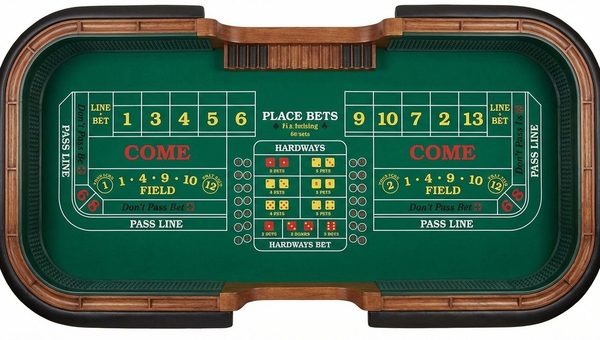
- Pass Line: The fundamental bet that the shooter will make their point or roll a natural.
- Don’t Pass Bar: The opposite of the Pass Line — betting the shooter will seven-out or roll craps.
- Come Bet: A bet placed during the point phase that functions like its own Pass Line bet on the next roll.
- Don’t Come: The opposite of a Come bet — functions like a Don’t Pass on the next roll.
- Odds Bet / Free Odds / Behind the Line: A supplementary bet placed behind Pass/Don’t Pass or Come/Don’t Come that pays at true odds with zero house edge.
- Taking Odds: Placing an Odds bet on a Pass Line or Come bet.
- Laying Odds: Placing an Odds bet on a Don’t Pass or Don’t Come bet.
- Place Bet: A bet that a specific number (4, 5, 6, 8, 9, or 10) will be rolled before 7.
- Buy Bet: Like a Place bet but pays true odds in exchange for a 5% commission.
- Lay Bet: The opposite of a Buy bet — betting that 7 will come before a specific number. Requires 5% commission.
- Field Bet: A single-roll bet that wins on 2, 3, 4, 9, 10, 11, or 12.
- Big 6 / Big 8: Even-money bets that 6 or 8 will be rolled before 7. Inferior to Place bets on the same numbers.
- Proposition Bet (Prop Bet): Any bet in the centre of the table, typically carrying a high house edge.
- Any Seven: A single-roll bet that the next roll will be 7. Worst bet on the table (16.67% house edge).
- Any Craps: A single-roll bet that the next roll will be 2, 3, or 12.
- Horn Bet: A combination bet split equally among 2, 3, 11, and 12.
- World Bet / Whirl: A Horn bet plus Any Seven combined into five equal units.
- Hop Bet: A single-roll bet on a specific dice combination (e.g., 3-2 hopping).
- C & E (Craps and Eleven): A combination bet on Any Craps and Yo (11).
- Insurance Bet: Any bet placed to hedge or protect another active bet.
- Contract Bet: A bet that cannot be removed once the point phase begins (Pass Line and Come bets).
Table Crew and Player Terminology
- Shooter: The player who rolls the dice.
- Boxman: The seated casino supervisor who oversees the game, manages the chip bank, and resolves disputes.
- Stickman: The crew member who controls the dice with a curved stick, announces results, and manages proposition bets.
- Base Dealer: One of two dealers (left and right) who handle bets, payouts, and chip placements on their respective sides.
- Pit Boss: The casino manager overseeing multiple tables, including the craps table.
- Virgin Shooter / First-Time Shooter: A player rolling the dice for the first time. Superstition holds that betting on them is lucky.
- Dice Handler: Informal term for the shooter.
Payout and Mathematics Terminology
- House Edge: The mathematical advantage the casino holds on a given bet, expressed as a percentage of each wager.
- True Odds: The actual mathematical probability of an outcome, without any house advantage built in. Odds bets pay at true odds.
- Vig / Vigorish / Juice: The commission charged by the casino on certain bets (typically 5% on Buy and Lay bets).
- Even Money (1:1): A payout that matches your original bet. Win £10, get £10 profit.
- Payoff Odds: The ratio at which winning bets are paid. For example, Place 6 pays 7:6.
- Pressing: Increasing your bet after a win, typically by doubling it.
- Regression: Reducing your bet after a win to lock in profit.
- Parlay: Letting your entire win ride on the next bet.
- Bridge: A stack of chips placed in an offset pattern to indicate different bet amounts or types.
- Colouring Up: Exchanging smaller denomination chips for larger ones, typically when leaving the table.
Stickman Calls and Announcements
The stickman announces every roll result using traditional calls. Here are the most common:
- “Coming out!” — Signals that the next roll is a come out roll.
- “Seven, winner!” — A 7 rolled on the come out (Pass Line wins).
- “Seven out, line away!” — A 7 rolled during the point phase (Pass Line loses, round ends).
- “Yo eleven!” — An 11 rolled on the come out (Pass Line wins).
- “Craps! Two/Three/Twelve!” — A craps number rolled on the come out.
- “The point is [number]” — Announces the newly established point.
- “Winner! [Number] the hard way!” — The point made as a pair.
- “Same dice!” — Player requests to continue using the same dice (typically after dice leave the table).
- “No roll!” — The roll does not count (dice did not hit the back wall, left the table, etc.).
Superstitions and Slang
- Hot Table: A table where shooters are consistently making their points. Players flock to hot tables.
- Cold Table: A table where shooters are frequently sevening out.
- Dice Are Cold: Superstitious expression meaning the dice are not producing favourable outcomes.
- Heating Up: When a shooter is on a good streak and players expect more wins.
- George: Casino slang for a generous tipper.
- Stiff: Casino slang for someone who does not tip.
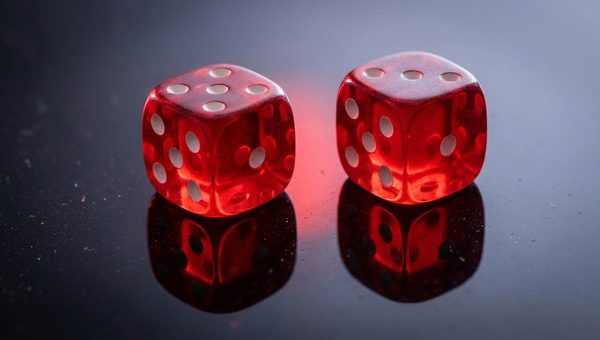
- Bones: Slang for dice.
- Chicken Feed: Small denomination chips or small bets.
For the complete rules that these terms describe, see our craps rules guide. To understand the probabilities behind each roll, visit our dice combinations and probability guide.
Frequently Asked Questions About Craps Terminology
Why do dealers say “yo” instead of “eleven”?
In the noisy casino environment, “eleven” sounds very similar to “seven.” Since confusing these two numbers could lead to betting errors, dealers use “yo” or “yo-leven” to clearly distinguish 11 from 7. This convention has been standard practice in casinos worldwide for decades.
What does “press it” mean at the craps table?
When a player says “press it,” they are asking the dealer to double their winning bet. For example, if your £10 Place bet on 8 wins, pressing it means putting the profit back plus your original bet to make it £20 for the next roll. You can also ask for a “half press” to increase by a smaller amount.
What is the difference between a seven-out and craps?
Craps refers specifically to rolling 2, 3, or 12 on the come out roll. Seven-out refers to rolling 7 during the point phase. Both result in Pass Line losses, but they occur at different phases of the game. Rolling 7 on the come out is a natural (a win), not a seven-out.
What does “the dice are off” mean?
This phrase means certain bets are not active on the current roll. During the come out roll, Place bets are typically off unless a player specifically requests them to be working. The dealer may announce “the dice are off” to confirm which bets are inactive.
What is a “don’t” player?
A “don’t” player bets on the Don’t Pass and Don’t Come, effectively wagering against the shooter. While mathematically sound (slightly lower house edge), this style can attract social friction because most players at the table are betting with the shooter and cheering for the same outcomes.
What does “colour me up” mean?
When a player says “colour me up” or “colouring up,” they are asking the dealer to exchange their smaller denomination chips for fewer, higher denomination chips. This is typically done when leaving the table to make it easier to carry chips to the cashier cage.
What is a “hardway” versus an “easy way”?
A hardway means rolling an even number as a pair of identical dice (e.g., Hard 8 = 4+4). An easy way means rolling the same total with non-matching dice (e.g., Easy 8 = 3+5 or 2+6). Hardway bets specifically wager that the hard combination will appear before the easy combination or a 7.
What does “behind the line” mean?
This is another way of referring to the Odds bet. When a player places an Odds bet behind their Pass Line wager, the chips are physically placed behind the line. Some players and dealers use “behind the line” interchangeably with “taking odds.”
What is a “hop bet”?
A hop bet is an unlisted proposition bet where you wager on a specific dice combination appearing on the very next roll. For example, “6-2 hopping” bets that one die will show 6 and the other will show 2. Hop bets on non-pairs pay 15:1 and pairs pay 30:1, with house edges around 11-14%.
Why is the number 7 sometimes called “it” at the craps table?
Superstitious craps players believe that saying the word “seven” aloud during the point phase will bring bad luck and cause the shooter to seven-out. To avoid this, players and even some dealers refer to 7 as “it,” “the devil,” or “big red.” While purely superstitious, this convention is deeply ingrained in craps culture.
What does “on the hop” mean versus a regular bet?
Regular bets like Place bets or Hardways remain active across multiple rolls until they win or lose. A bet “on the hop” is a one-roll wager on a specific outcome. The distinction matters because hop bets resolve immediately on the next roll, while standard bets persist through multiple rolls.
What is “taking the don’ts down”?
This refers to removing a Don’t Pass or Don’t Come bet during the point phase. While allowed (since these are not contract bets), it is mathematically unwise because once a point is established, the Don’t bettor actually has the mathematical advantage. Dealers will warn players against this move, and seasoned players consider it a novice mistake.